A lyrical, elegant, and technically refined piece somewhat marred by its repetitive and clichéd exploration of the theme
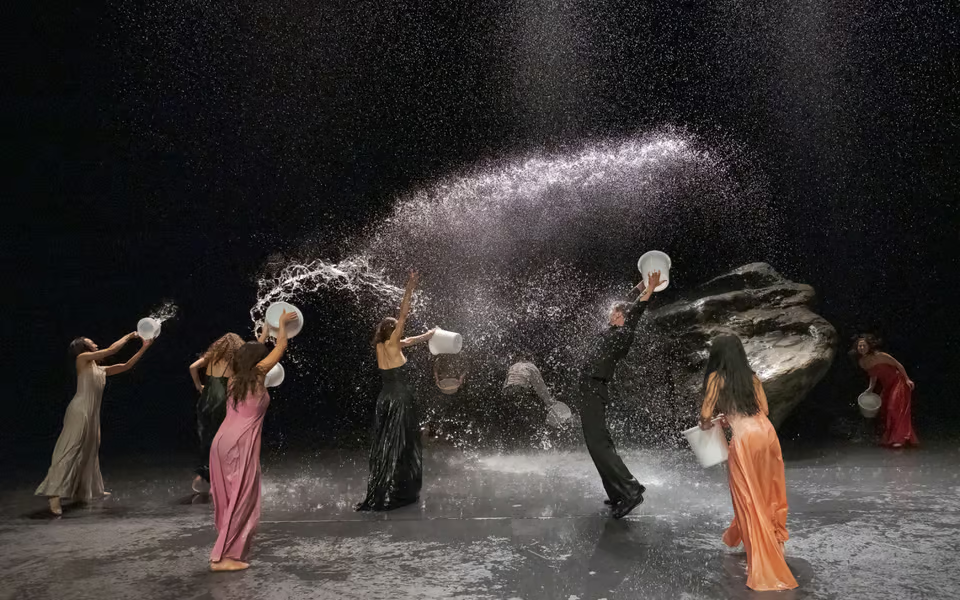
With its ever-present deluge of water cascading over a towering black rock, Pina Bausch’s Vollmond, one of her last pieces, immerses its audience in a world where desire, power, and human relationships ebb and flow like the tides. Combining Bausch’s signature fragmented storytelling with virtuosic solos, the piece oscillates between humorous spoken words and sheer physical exhilaration, encapsulating the essence of her Tanztheater aesthetic.
The structure is eye-catching, shifting between fragmented, almost illogical vignettes that depict “boy-meets-girl” scenarios (and later, married life) in an exaggerated, humorous manner, interwoven with breathtaking solos that channel raw, lyrical intensity. The courtship and sexual dynamics of these narrative vignettes are often played for laughs, drawing frequent bursts of laughter from the audience. One particularly comedic scene sees two women vying for attention through increasingly absurd sitting poses. Their competition continues even after the men have left. Another (more than necessarily) long sequence features a woman instructing her men to undo her bra, advising one of them to “find someone to practice on.” However, a shift in power dynamics becomes evident in the second half. One scene portrays women attempting to flee abusive relationships, while another, darkly ironic moment portrays a woman saying sorry to her husband, because he hurts his hand while beating her.
Accompanied by the pouring rain and the violin-led soundscape, the solos that punctuate these vignettes stand as the most thrilling and overwhelming moments of the performance. While the dancers’ movements execute lightness and elegance, the emotions they express are visceral and profound. Their bodies, transforming like the water and at times literally in it, declare certain vitality that encapsulates Pina’s unique vision of femininity, or “women’s empowerment” in a more fashioned way. The rain crusts on a giant black rock designed by Peter Pabst, also easily reminding you of its hidden Asian aesthetics.
While the show illustrates the ensemble’s exceptional dance techniques and Pina’s unparalleled choreography, it’s a shame that they are exploited to express such a relatively dull theme. The title Vollmond, German for “full moon”, suggests an imagery of infinite richness—cycles, transformation, lunacy, and the becoming unknown— the production confines itself to the well-worn territory of heterosexual relationships moving through dating, marriage, and the micro power controls. Undeniably, these themes are central to Bausch’s repertoire, here they feel flirtatious yet less thoughtful, leading to a repetitive second half which some may feel too long. Furthermore, certain depictions of women, such as repeated portrayals of female hysteria, with dancers screaming and beating against themselves at different stages of their relationships, read as outdated in a contemporary context.
Human, all too human. From the women swimming in the bittersweet river of love in the first half to the ending where everyone floating in it, Pina lays bare love, desire, and raw humanity in her most straightforward way. While its sensory and emotional impact is undeniable, one cannot help but wonder whether its exploration of gender and relationships could have reached beyond the norms, into the infinite unknown of the full moon.