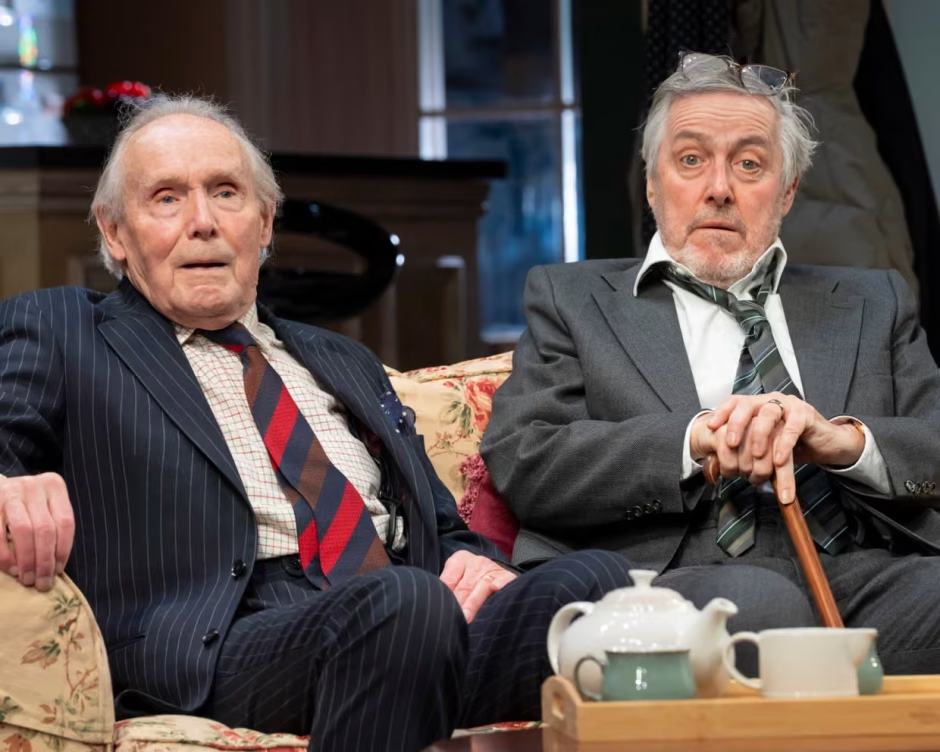
Jonathan Lynn struggles to keep up with the ‘woke’ times without Antony Jay
As a product of Thatcher Britain, Yes Minister / Yes Prime Minister, although set at No. 10 Downing Street, remains relatively apolitical in its aesthetics and taste: intellectually refined, subtle, restrained and slightly cynical. It is deeply contextualised in the culture of the British bureaucratic system, where power circulates through protocol and language. You don’t need to really figure out Sir Humphrey’s endless clauses and rhetorical jargons; but you know it is simply, deadly funny.
Even favoured by Thatcher herself, the television series was widely popular and successful in an era far less polarised than our own. Now, in this ‘woke’ era, Jonathan Lynn is desperate to engage with those contemporary debates. Retired from No. 10, Jim Hacker (Griff Rhys Jones) has moved to Oxford as a college master, which is of course, set up by Sir Humphrey (Clive Francis). Sophie (Stephanie Levi-John), a Black lesbian with a degree in English Literature from Oxford, is his care-worker (not “carer”), cooking, cleaning and, washing his underpants.
Hacker’s idle Oxford life doesn’t last long. Sir David (William Chubb), the legal head of the college, bringing the students’ collective will: they want Hacker to resign for his comments on Britain’s colonisation over India. When Sir David asks him does he really believe colonisation was civil and progressive, Hacker admits that “It depends who I’m talking to”. Hacker turns Humphrey for help, while Humphrey, equally entrapped in his past privileges and entitlements, also needs help from Hacker to avoid being jobless.

Sadly, Lynn offers a disastrous example of how a television sitcom can falter when transformed to stage. Shifting away from the unsettling criticism against the UK’s civil servant system and nuanced power balance between politicians and civil servants, this production centres on current issues like LGBTQ rights, immigration, racism and gender equality, packed with dated comments that are neither offering any refreshing sights, nor pleasing either side. For the progressive, Sophie’s portrayal is reductive and stereotypically “ticking all the boxes”, despite Levi-John’s efforts to bring nuance and depth, which ultimately fails in Lynn’s predictable dramatic trajectory. For the conservative, both Hacker and Humphrey are reduced to clowning caricatures, seemingly offensive in their words but utterly incapable of offending anyone.
Comedy should be the art of offence – at progressive, at conservative, at everyone, at oneself. What makes me feel really sad is that Lynn seems dare not to offend anyone. His tone is cautious and pandering. Lynn’s carefulness kills comedy, kills the laughter at Apollo theatre, and ultimately kills a canon made by himself some four decades ago.