
25 years later, Sarah Kane’s seminal work still rings true
A pioneer of ‘in-yer-face theatre’, Sarah Kane was known for awaking at 4.48am in a depressed state to write her plays, typically exploring themes of pain and torture, love and desire. Her final play, 4.48 Psychosis has been described as ‘a 75-minute suicide note’, as it debuted at Royal Court Theatre over a year after she hung herself.
Seeing this play almost exactly 25 years after it’s world premiere in June 2000 in the very same intimate theatre with the very same cast and director, is a surreal experience. We are thrust into the mind of a suicidal woman moving in and out of psychiatric care, this play given extra poignancy due to its autobiographical nature.
Although mental health is much more part of the conversation today than it was 25 years ago, services are in decline, with a troubled healthcare system struggling to keep up with the needs of society. At a post-show Q and A, audience members speak about the difference between seeing it 25 years ago and now, notably that lots of the psychiatric drugs spoken about used to be just words, but now are familiar supplements they rely on themselves.
A tight, flawless ensemble, typically 4.48 Psychosis is performed by 3 nameless actors, all portraying the same tormented woman. Daniel Evans, Jo McInnes and Madeleine Potter are a stunning cast, with deeply resonant vocals reverberating around the 80-seat theatre.
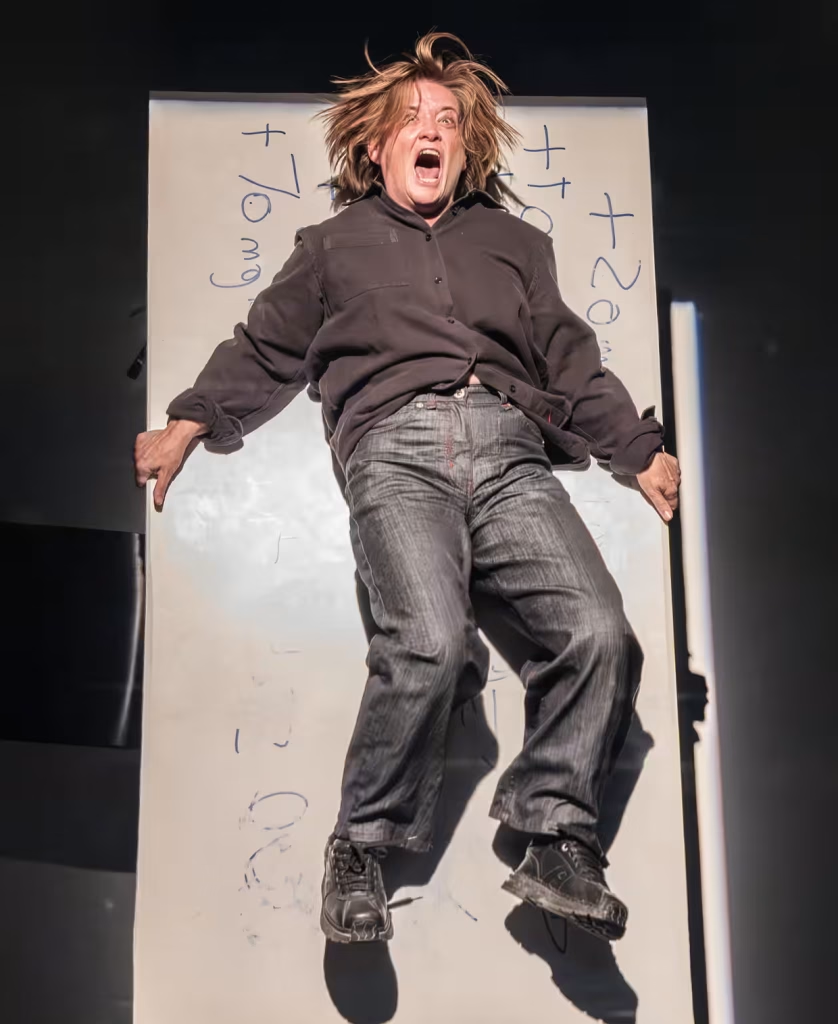
Jeremy Herbert’s set consists of a blank white floor, with an angled mirrored ceiling allowing the audience to see themselves and the actors, who make use of the device to frequently lie on the ground and look at us through the mirror. Lighting by Nigel Edwards is abrupt, often jarring, taking us from a cold examination room, to a fuzzy TV set, to a serene psychiatrists office and back again.
Director James Macdonald reflects on when he first staged the work, feeling the need to create some order in the famously ‘kaleidoscopic play’ and demarcate clear scenes and changes in pace to make it seem less like ‘one long howl of pain’. As the play has gained notoriety over the years, this time Macdonald didn’t feel this pressure, letting the work run its course along a central through-line. This production does suffer from this choice, with a lack of pace slowing momentum and leaving the play to drag in some moments.
A faithful interpretation of the iconic work, Kane’s words still resonate, despite their shocking nature. How relevant they are in the next 25 years will remain to be seen.