

There is no “right” way of listening to For Phillip Guston […] [it] is not just a listening exercise but a living one.
GBSR Duo, George Barton (percussion) and Siwan Rhys (piano), are one of the three artists in residence for Kings Place in 2026. Previously Kings Place has offered an annual series of award-winning performances surrounding a theme and this year’s programme is titled Memory Unwrapped; the series intends to get artists and their audiences ‘remembering the past to reimagine the future’.
The GBSR Duo have definitely a lot to offer the programme this year, their broad interest in 20th Century Modernism ranging from Stockhausen to Aphex Twin (a pairing which they are performing later this month at the Southbank Centre) affords an insightful and experimental take on the meaning of memory.
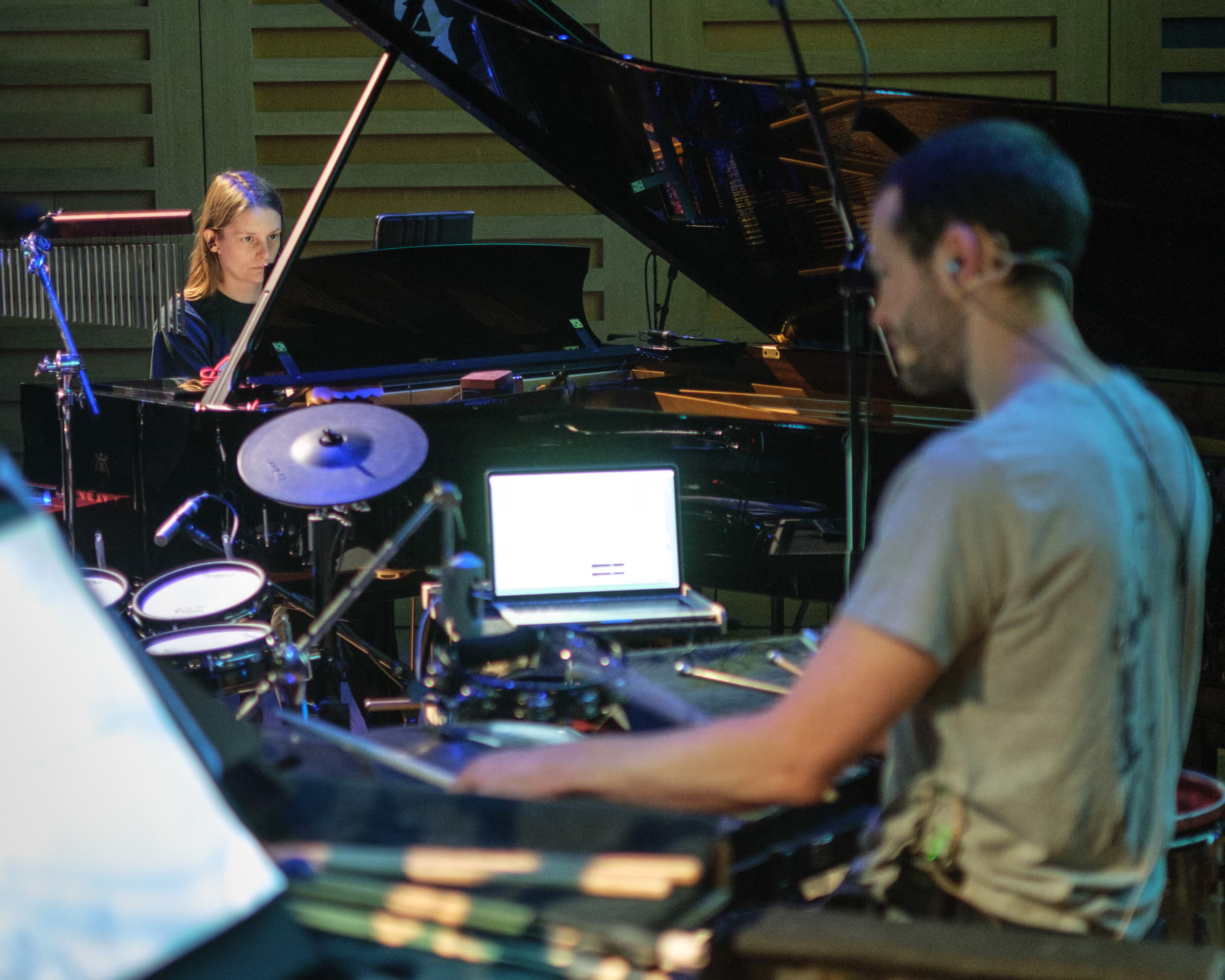
Their performance of renowned composer Morton Feldman’s single-movement work, For Phillip Guston, is a perfect example of their approach. Playing alongside Taylor MacLennan (flute, alto flute, piccolo) the ensemble took on the mammoth task of performing Feldman’s 4 and a half hour long composition with no interval. This performance is not for the faint of heart, not only is it a test of endurance (people complete marathons in less time) but it is also, aptly, a test in memory.
For Phillip Guston is a textured landscape of soft lasting sounds and motifs, whether it be from the tubular bells, celeste or piccolo the haunting range and duration of these phrases cause the ‘listener [to become] unable to retain everything they have heard […] unsure if they are hearing repetition, variation or new material’. Feldman’s composition is hypnotic, it is the deliberate desynchronising of the ensemble which gives an uneasy scale tipping quality to the beginning of the piece. Sounds between the trio are tipped back and forth in slow but constant motion, it takes some getting used to. Once you’re in, the experience becomes something totally unique and meditative in its journey.
There is no “right” way of listening to For Phillip Guston, I overheard an audience member say he had seen this piece once 15 years ago and “very sore bums” are to be expected. Throughout the performance I looked around and some people had shut their eyes, others nodded off. Fewer people than I expected walked out, there was continual readjustment of seating positions and someone, ridiculously, brought a baby which was quickly removed from the space. I definitely learnt something about myself during this rare performance. Focus, fatigue and curiosity came in constant waves. For Phillip Guston is not just a listening exercise but a living one, assisted by the fact that my watch had broken and my phone was off, I had no concept of time nor any idea of what four and half hours felt like.
Another clever angle this piece approaches memory from is the fact the work also serves as a memorialisation; a tribute to the close friendship between Feldman and the eponymous Abstract painter Phillip Guston. The pair became estranged in 1970, a decade prior to Guston’s death in 1980. Feldman felt betrayed that Guston had turned to figurative painting which in his mind was Guston effectively turning his back on the foundation of their friendship; their mutual love for Abstract Art and Music. They never reconciled. Yet the final half an hour of the piece feels hopeful. Its arrangement is more harmonious and pretty than previous parts and perhaps this is a slight sign of acceptance or reconciliation in grief.
Once I left the auditorium I honestly forgot what the piece sounded like, and I think that’s the point. The performance plays with your musical ear, constantly sounding both familiar and unfamiliar, blurring the lines between present and memory. For Phillip Guston is a listening experience unlike anything I’ve ever had before. As an audience member you are implored to immerse yourself in a long and intimate encounter with sound. The trio deserved the masses of applause for their discipline and focus. They performed this piece with such high fidelity and grace, it’s something I will never forget but I might wait 15 years to hear it again.
A thoughtful and thorough analysis of a musical experience. . After reading this article l felt that l too had been there at this performance.