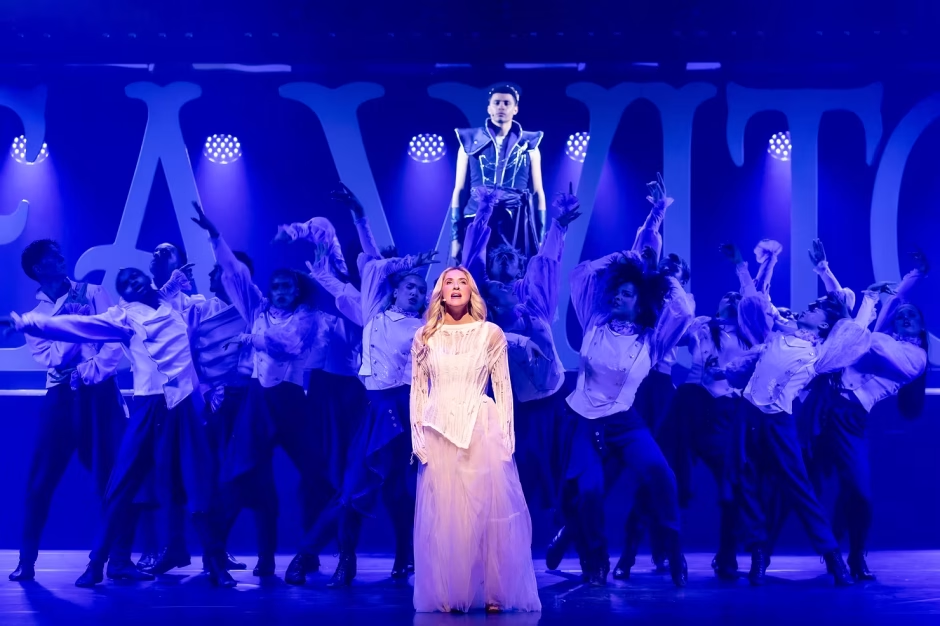
Whenever a new musical arrives on the scene there is a particular sense of anticipation. Amid a West End landscape dominated by long-running favourites and familiar “extension announced” headlines, the promise of an original story finding its voice on stage still carries a certain thrill. That sense of possibility surrounded the concert presentation of Sea Witch at Theatre Royal Drury Lane, a one-night showcase designed to generate excitement and momentum towards a future full production. On that front, it succeeded. The event created genuine buzz and curiosity around what this new musical might become.
Based on the young adult novel by Sarah Henning, Sea Witch explores the now familiar storytelling device of revisiting a villain’s origins. Much like the narrative re-framings popularised by works such as Maleficent or the stage phenomenon Wicked, the story asks what might lie behind the legend. Here, the focus is Evie, a witch trying to survive in a world where magic is outlawed. When her path collides with Annemette, a mermaid guarding secrets of her own, both are propelled towards a destiny that reshapes the myth audiences think they know.
It is an intriguing premise, though the storytelling occasionally struggles beneath the weight of its own mythology. With multiple characters, shifting allegiances and a detailed fantasy world to establish, the narrative sometimes becomes convoluted, leaving the central trajectory of Ursula’s transformation slightly obscured. In this concert staging the story could linger in places, creating moments where the pacing stalled rather than building momentum. Some tightening and streamlining would help sharpen the emotional journey and ensure the central relationships land with greater clarity.
The score, with music and lyrics by Segun Fawole, contains several striking moments. Songs such as “Every Woman”, “There’s a Woman” and “Wonder” stand out, carrying real emotional weight and offering glimpses of the musical’s potential. Others, including “Glory” and “Myths of Maritime”, felt more extended than necessary in this format. Part of this may be a consequence of the concert presentation itself; numbers that appear to build towards visual moments, such as Evie discovering her powers, inevitably feel incomplete without the staging and theatrical effects that would bring those moments fully to life.
Elsewhere, songs like “Queen” and “Untoppable” are undeniably enjoyable but carry echoes of contemporary musical theatre hits such as Six and Wicked. While these influences are hardly surprising in modern musical theatre, further developing a distinctive sonic identity would help Sea Witchstand apart and strengthen its ambition to become a major new musical.
The cast assembled for the evening ensured strong audience interest. Jay McGuiness drew a sizeable crowd and delivered a heartfelt performance as Iker, though the vocal demands alongside the choreography occasionally stretched the performance. Natalie Paris brought sincerity and warmth to Evie, grounding the character with a thoughtful musical theatre performance that helped anchor the emotional core of the story.
As Nik, Djavan Van de Fliert embodied the archetypal handsome prince, though the performance at times leaned towards exaggeration, perhaps an attempt to fill the narrative gaps left by the concert format. The inclusion of high-profile names such as Michelle Visage and Mazz Murray added star power, though their characters felt comparatively underdeveloped within the story presented here.
One of the evening’s strongest performances came from Amy Di Bartolomeo as Annemette, delivering a confident and engaging turn that hinted at a deeper relationship between Annemette and Evie than the script currently allows. With so many characters in play, focusing more intently on a few key relationships would strengthen the storytelling and ensure pivotal plot developments feel fully earned.
A special mention must also go to the dancers and backing vocalists, whose lyrical choreography created a striking visual accompaniment to the music. Even within the limitations of a concert format, their presence added energy and theatricality.
There is undeniable potential within Sea Witch. The concept taps into contemporary fascination with re-examining villains and reclaiming misunderstood identities. Yet to realise the scale of spectacle the story seems to demand, the show would benefit from significant streamlining and development. With refinement, and perhaps a slightly leaner running time taking it under the two-and-a-half-hour mark, this mythic origin story could evolve into something genuinely distinctive.
For now, the buzz generated by this first outing suggests that audiences are ready to dive deeper into its dark waters. The next stage of the journey will determine just how powerful this new musical can become.