


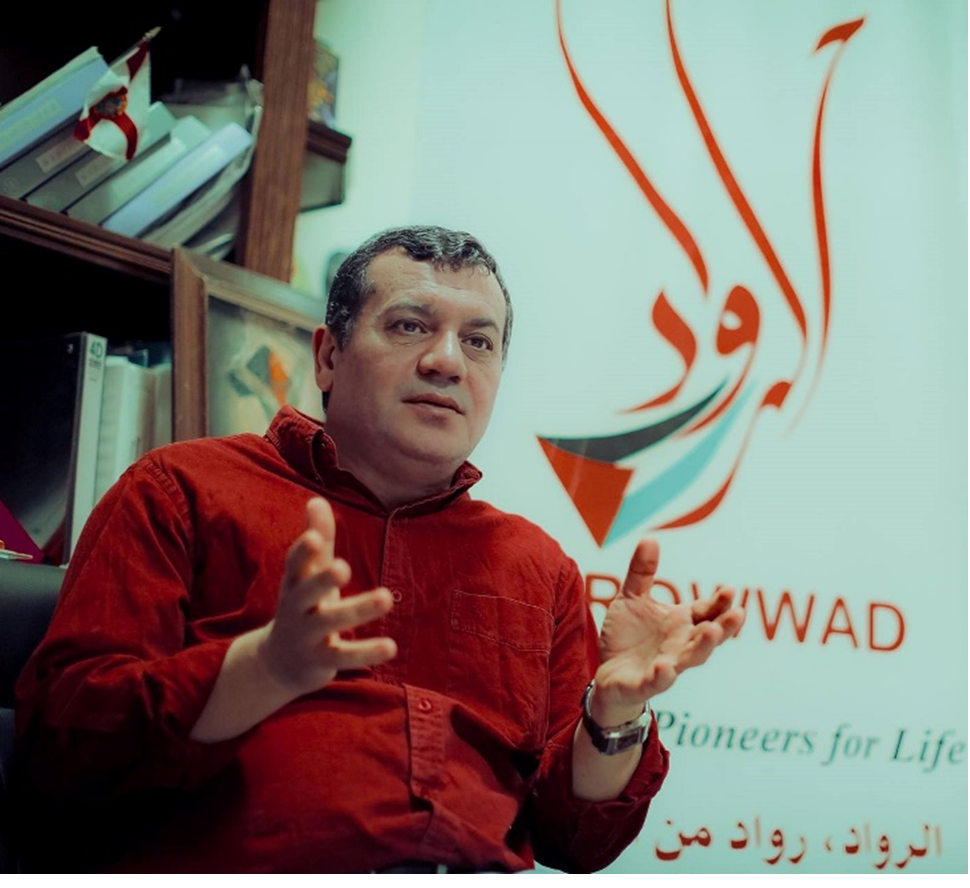
We sat down with. Dr. Abdelfattah Abusrour, director of Alrowwad Centre for Arts and Culture which started life in Aida refugee camp in Bethlehem in 1998 and co-founder of the Bethlehem Cultural Festival. Alrowaad’s young dance company will be opening the festival with their traditional dabkha dance show, The Camp’s Gate.
1. Can you tell our readers a bit about dabka dance?
Palestinian folkloric-traditional dance is part of the Palestinian identity. It is rooted in the Canaanite heritage linked to the land. As people were peasants and farmers, part of this was at the times of harvesting grains, stepping on the wheat or barley or other cereals to separate grains from straws, creating a collective rhythm in doing that, and moving towards hitting the ground harder as prayer to call for rain to fall and plants to grow up… joining in the nights to tell stories and dance in celebrations.
The Palestinians, like many other people proud of their cultural heritage, have continued to transfer this art to the younger generations, adapting and choreographing new movements and modernising, with some groups mixing modern dance with the traditional steps and movements
It is a celebration of life, joy, feelings and resistance.
2. You are bringing your young dance company – what age range are you bringing?
Our participants are three girls and three boys who are between 17 and 21 years old
3. How did you find your dancers?
Our dancers come as trainees who join very young either as part of our mobile Beautiful Resistance training programme in schools and community centres in Bethlehem and the West Bank or by being subscribed by their parents or themselves. They train for two days then selection in shows or local tours is based on skills, commitment to rehearsals, team spirit, openness and general attitude towards their colleagues. For international tours, some language skills might be a plus.
4. Alrowwad Centre for Arts and Culture started at the Aida refugee camp – where are you based now?
Alrowwad started in 1998 in Aida refugee camp, Bethlehem where its main quarters are. It has mobile programmes that go all over the West Bank, in more than 200 locations. It also tours internationally.
Last month we rented another space for the music and arts school in Bethlehem city to open possibilities for those who are not from the Aida refugee camp but from from neighbouring refugee camps or towns. There is also Friends of Alrowwad as charities in The United States, Norway and United Kingdom.
5. What is something you want attendees of the festival to walk away thinking?
We do hope that this will be an amazing and artistic opportunity for attenders to discover Palestinian culture, art and humanity as part of the Palestinian narrative. We also hope that they will think joining Friends of Alrowwad and support our work that promotes life, inspires hope and provides possibilities for children, youth and women with creative, beautiful and peaceful ways of expression; to prioritise living rather than dying for their country or whatever cause they defend, and for individuals to be peacebuilders in their community and beyond.